Recycle old phones sounds like a simple instruction, but I had a drawer with four dead or outdated phones in it and no real idea what “recycling” one actually meant beyond dropping it somewhere and hoping for the best. So I went through the actual options available, used a few of them, and looked into what genuinely happens to a phone after it leaves your hands.
None of it was as straightforward as “recycling” makes it sound, and one option turned out to be clearly better than the rest for most people.
Why Old Phones Can’t Just Go in the Regular Trash
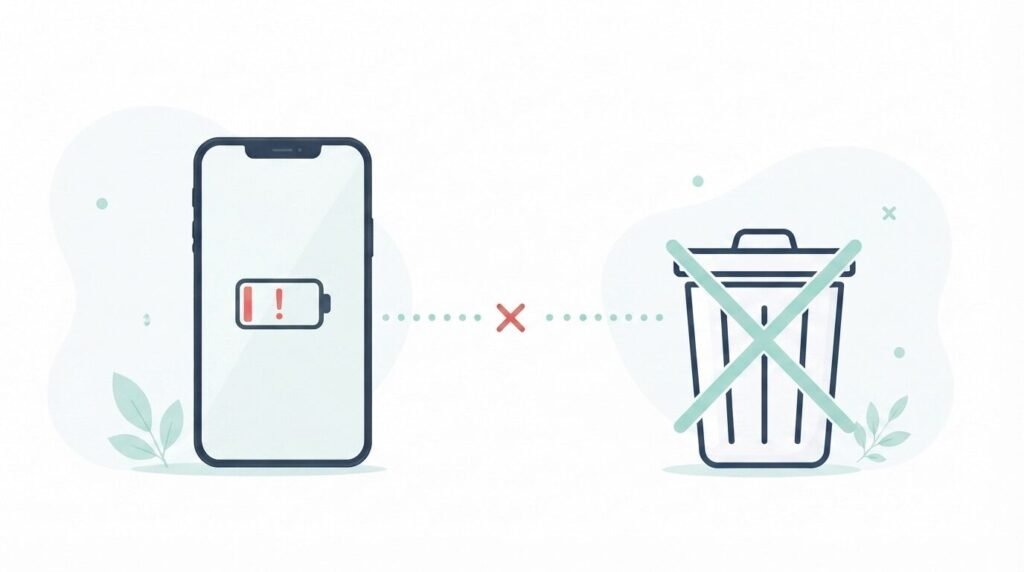
Phones contain a mix of materials that make them unsuitable for standard trash disposal in most places, and in many states, actually illegal to throw away with regular household waste.
The battery is the main concern — lithium-ion batteries can pose a fire risk when crushed or damaged in a landfill or garbage truck, separate from the environmental impact of the metals and rare earth elements inside the device itself. Most electronics recycling regulations exist specifically because of what’s inside, not just general “e-waste is bad” sentiment.
What I Actually Tried
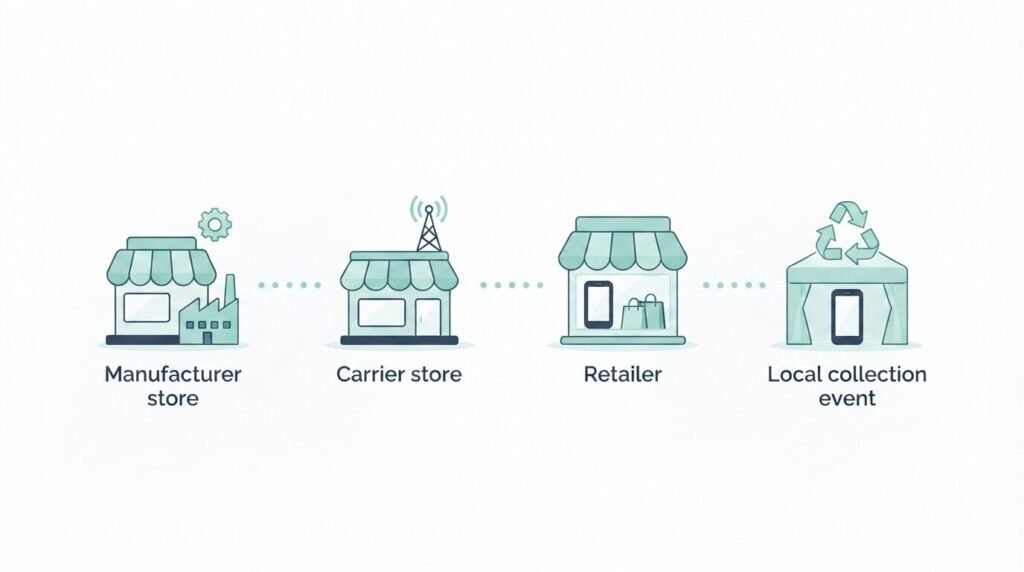
Manufacturer trade-in and recycling programs (Apple, Samsung, Google) — checked whether phones too old or damaged for trade-in credit could still be recycled through the same programs.
Carrier drop-off programs — most major carriers accept old phones, regardless of brand, at physical store locations for recycling.
Retailer take-back programs — several major electronics retailers accept old phones for recycling even without a purchase.
Local e-waste collection events — checked whether the city had scheduled electronics recycling days, separate from regular curbside pickup.
What Actually Happens After You Recycle a Phone
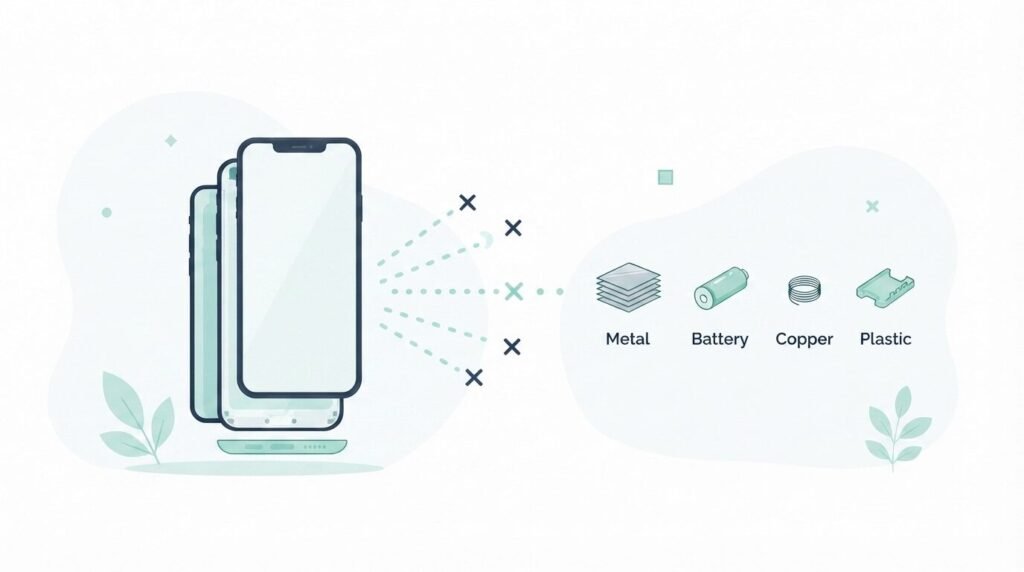
For phones that still have resale value, most programs first check whether the device can be refurbished and resold rather than broken down for parts, since a working device is worth significantly more intact than in pieces.
For phones too old or damaged to resell, the device typically goes through mechanical disassembly, where valuable materials — gold, copper, and other metals in small quantities — are extracted and sold to material recovery companies, while the battery is processed separately due to the fire risk mentioned earlier.
The genuinely disappointing part: not everything gets recovered. Some plastics and lower-value materials still end up in general waste after the valuable components are stripped out, which is part of why recycling reduces environmental impact rather than eliminating it entirely.
Which Option Actually Made the Most Sense
Based on convenience and what actually happens to the device, a few patterns held up.
Manufacturer programs were the most straightforward for phones still in reasonable condition, since the same portal used for trade-in value checks also handles pure recycling for devices with no resale value.
Carrier drop-off was the easiest for damaged phones, since it required no shipping and accepted phones in any condition, from any brand.
Local e-waste events were worth checking but inconsistent, since they only run on specific scheduled days rather than being available anytime.
Before recycling any phone, wiping it completely matters more than which recycling option is chosen — I covered the exact steps for both platforms in my phone trade-in value guide, which applies the same way whether a phone is being sold, traded in, or recycled.
Frequently Asked Questions
Do I need to remove my phone’s data before recycling it, even if it’s broken? Yes, if the phone still powers on at all. A factory reset should be done first whenever possible, since recycling programs process devices in bulk and don’t guarantee manual data removal.
Can a phone with a cracked screen or that won’t turn on still be recycled? Yes — most recycling programs, especially carrier and manufacturer drop-offs, accept phones in any condition, since the recycling process doesn’t require the device to be functional.
Is it better to recycle an old phone or keep it as a backup device? If it still works and has some remaining battery health, keeping one as a backup or emergency device is a reasonable middle ground before recycling becomes the better option.
Do recycling programs actually pay for phones with no resale value? Generally no — pure recycling (as opposed to trade-in) is typically free but doesn’t come with a payout, since the phone has no resale value left to offer in exchange.
The Real Answer
Recycling a phone properly involves more steps than dropping it in a bin, but manufacturer and carrier programs make the actual process straightforward once you know they exist. The environmental impact is real but not perfect — some materials genuinely get recovered, and some don’t, which makes recycling meaningfully better than the trash but not a fully closed loop.
📍 Read Next: If a phone still has some resale value, it’s worth checking that first — I Checked What My Old Phone Is Actually Worth in 2026 covers what actually affects that number.