
My phone died on a Tuesday — not a slow decline, just a black screen that never came back on. I had maybe an hour to decide what to do before I needed a working phone again, and standing in the store, the price gap between new and refurbished was bigger than I expected. Instead of just picking the cheaper option and hoping for the best, I actually sat down and ran a real refurbished vs new phone comparison, the way I wish I had before I was in a rush.
Why I Even Considered Refurbished This Time
I’d always assumed refurbished meant “someone else’s problem, cleaned up and resold.” That assumption turned out to be mostly wrong, at least for the certified refurbished option I looked at. Certified refurbished phones go through functional testing, battery replacement if health drops below a set threshold, and a cosmetic grading system that tells you upfront whether to expect visible wear. Uncertified refurbished — the listings with no seller guarantee — is a different situation entirely, and I ruled that out almost immediately once I understood the difference.
What I Actually Compared, Side by Side
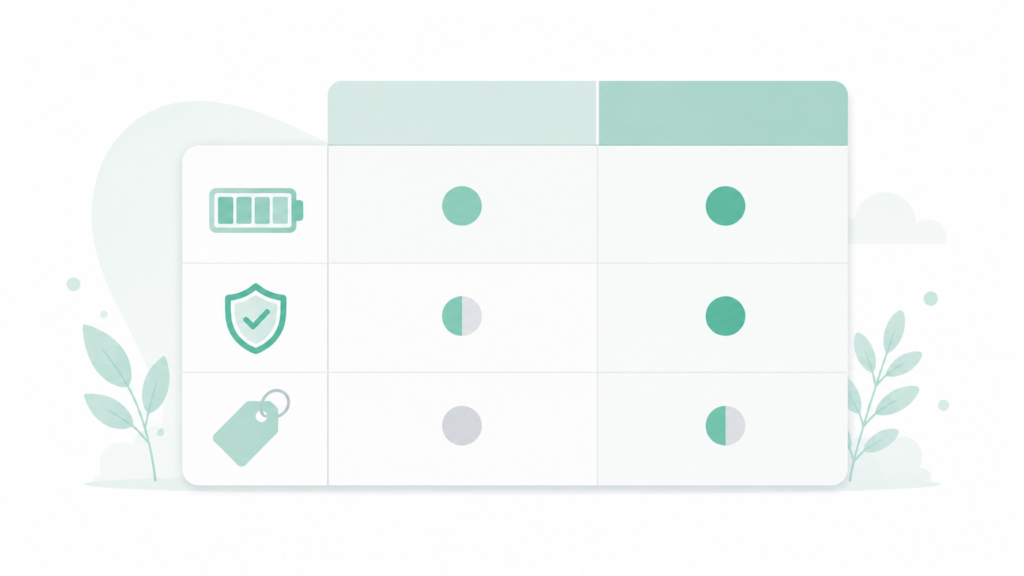
Price. The refurbished model was about 35% cheaper than the same model new, which was the number that got my attention in the first place.
Battery health. The certified refurbished listing specified 85% battery health minimum, verified before sale. New, obviously, starts at 100%. This was the gap that worried me most going in.
Warranty. The refurbished phone came with a 90-day warranty through the retailer. The new phone came with the standard one-year manufacturer warranty. This turned out to be the single biggest gap between the two options, not the price and not the battery.
Cosmetic condition. The refurbished listing was graded “excellent” — light wear, no visible scratches on the screen. New is obviously untouched, but the visual difference in hand was smaller than I expected.
Software support. Both phones were the same model, so both get the same number of years of OS updates going forward — this ended up being a non-factor in the comparison, which somewhat surprised me going in.
Where Refurbished Actually Won
The price gap was real and it stayed real once the phone was in my hand — no hidden fees, no “certified” markup that ate into the savings. The battery health came in at 89%, above the stated minimum, and after three weeks of normal use I genuinely can’t tell the difference in daily battery life compared to a new unit. The cosmetic grading was accurate; I found one faint mark on the back that I only noticed because I was looking for it.
Where New Still Won

The warranty gap is the part I keep coming back to. Ninety days covers early defects, but it doesn’t cover the kind of problem that shows up eight months in, which is exactly the window a full manufacturer warranty is built for. If something goes wrong with the battery or a component at month five, refurbished means paying out of pocket; new means it’s covered. That’s not a small difference, and it’s the one number that doesn’t show up anywhere in the price comparison.
There’s also a psychological cost that’s harder to put a number on — for the first week, I found myself checking the phone for scratches I knew weren’t there, in a way I never do with something bought new. That faded, but it was real while it lasted.
What to Actually Check Before Buying Refurbished

If you’re deciding between refurbished vs new phone and want to avoid guessing, here’s what actually mattered in my comparison:
- Confirm “certified” refurbished, not just “refurbished.” Certified means functional testing and a stated battery health minimum happened before the sale. Uncertified listings carry none of those guarantees, and the price difference often isn’t worth the risk.
- Ask for the battery health percentage in writing, not just “good condition.” A number you can hold the seller to is worth more than a description that means nothing if the battery underperforms after a month.
- Compare the warranty length directly, not just the price. A 90-day refurbished warranty against a full-year new warranty is often a bigger gap than the price difference itself, especially for anyone planning to keep the phone more than a year.
- Check the cosmetic grading system the seller uses. “Excellent,” “good,” and “fair” mean different things depending on the retailer — look up their specific grading definitions before assuming what you’ll receive.
- Confirm the software update timeline is identical to a new unit of the same model. This is usually true, but worth confirming, since it removes one variable from the comparison entirely.
Frequently Asked Questions
Is a certified refurbished phone actually as good as new? Functionally, in most cases yes — certified refurbished phones are tested and the battery is verified above a stated threshold. The real gap isn’t performance, it’s warranty length, which is typically much shorter than a new phone’s coverage.
How much cheaper is refurbished usually? In this comparison it was about 35% less for the same model, though the exact discount depends on the model’s age and the retailer’s grading system.
What’s the difference between certified and uncertified refurbished? Certified refurbished comes with functional testing, a battery health guarantee, and a warranty from the seller. Uncertified listings typically offer none of those guarantees, which makes the lower price a real gamble rather than genuine savings.
Does buying refurbished mean giving up years of software updates? No — as long as it’s the same model as the current new version, software update support is identical. The phone’s age relative to its own release date is what determines the update timeline, not whether it was refurbished.
The Real Difference
Price and battery health were the numbers I expected to matter most going in, and they turned out to be the least of it — both landed close enough to new that they weren’t worth agonizing over. Warranty length is the one that actually deserves the most attention, since it’s the gap that only shows up months later, long after the decision’s already been made.
📍 Read Next: If refurbished isn’t the right call and trading in the old phone is part of the plan instead, knowing what it’s actually worth first changes the math — I Checked What My Old Phone Was Really Worth. The Number Surprised Me. covers that side of it.